Marc Nater, PhD
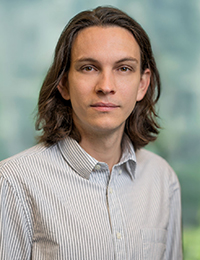
Postdoctoral Researcher, Cancer Biology and Genetics Program
Sloan Kettering Institute, Memorial Sloan Kettering Cancer Center
Unraveling stromal hierarchies in the pancreatic tumor macroenvironment
Memorial Sloan Kettering Cancer Center Profile
Google Scholar Citations
Overview
Aim: Tumor Biology
Pancreatic ductal adenocarcinoma (PDAC) is the most common type of pancreatic cancer and has a low five-year survival rate of 13%, in part due to the high percentage of patients who are diagnosed with metastatic disease. While the environment surrounding tumor cells in the pancreas has been well characterized, the niches in which metastases develop in other organs remain poorly understood. Wherever PDAC spreads, it establishes a dense stroma heavily populated by specialized cells called fibroblasts. Tumor cells recruit and reprogram these fibroblasts into cancer-associated fibroblasts (CAFs), which help the tumor grow, evade the immune system, and resist therapy. It is currently unknown how the CAFs found within the primary pancreatic tumor compare to those at sites of distant metastasis, and what effect these differences have on cancer progression and treatment efficacy.
Hirshberg Foundation Seed Grant recipient, Marc Nater, PhD, a postdoctoral researcher at the Sloan Kettering Institute, Memorial Sloan Kettering Cancer Center, seeks to uncover vulnerabilities common to CAFs at both the primary and the metastatic tumor sites to reveal new therapeutic targets for patients with advanced pancreatic cancer. In Dr. Nater’s proposal, Unraveling stromal hierarchies in the pancreatic tumor macroenvironment, he will map and compare CAFs across tumors in the pancreas and the most common sites of dissemination using novel preclinical models. By profiling individual cells, he hopes to discover shared regulatory programs driving CAFs across metastatic sites. Using patient-derived CAF cell lines, he will then evaluate these candidates to identify those that shape CAF identity and test their impact on tumor growth and spread. This project may not only yield new therapeutic strategies for metastatic pancreatic cancer but also generate an atlas of primary and metastatic PDAC CAFs to serve the greater research community.
The Hirshberg Foundation is excited to support Dr. Nater’s research with a 2026 Hirshberg Foundation Seed Grant Award. In reply to the news of this award, Dr. Nater wrote, “Thank you all for this exciting opportunity. We are looking forward to partnering with the Hirshberg Foundation over the next year.”