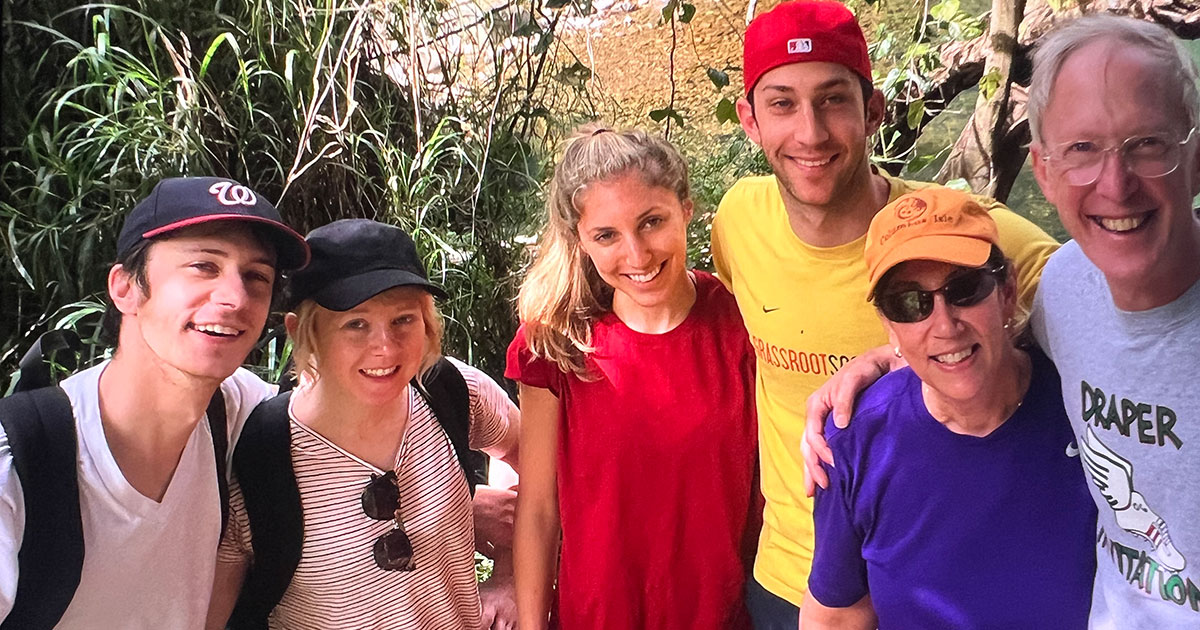
In June 2014, a few months after celebrating his 65th birthday, Don Tracy was in Rome with his wife, Debby, waiting for friends to join them for a two-week trip. After dinner at one of their favorite pizza places, Don began to feel awful. He returned to the hotel and spent the night in bed, overcome with nausea.
Don called his close friend, Rich, back home, who also happened to be his gastroenterologist. Suspecting pancreatitis, Rich advised him to return home for an examination. Two days later, Don and Debby cut their trip short and headed back to Bethesda, Maryland.
Initially, the examination revealed nothing concerning, and Don began to feel better. But a week later, the symptoms returned. This time, his doctor ordered a CT scan. Don rarely asked technicians how a test had gone, but something prompted him to ask this time. The technician’s reaction spoke volumes. He blanched and told Don that his doctor would call.
When Rich called, he didn’t give Don the results over the phone. Instead, he said, “I’m coming over.”
The scan revealed a growth on Don’s pancreas and a concerning spot on his liver. A biopsy confirmed what everyone feared: stage IV, inoperable, metastatic pancreatic cancer.
Twelve years later, Don is still here. He continues to see his oncologist, Dr. John Marshall, and shares a message that has remained on his desk since shortly after his diagnosis. A high school friend sent him a card with six simple words: “Proceed as if success is inevitable.”
Don found it to be great advice, and he hopes it can help others facing a similar diagnosis.
Finding the right team
For many years, Don chose not to learn the details of his disease, relying instead on Debby to manage his care and navigate the decisions ahead. The couple had connections at M.D. Anderson and Memorial Sloan Kettering, but they wanted to stay closer to home in Bethesda, where they have lived for 40 years.
Debby explored their options, taking Don to Johns Hopkins in Baltimore and to Georgetown University, where Dr. Michael Pishvaian was leading a study of an experimental drug called veliparib, a PARP inhibitor.
Then Don’s gastroenterologist offered one more piece of advice: before deciding, they should meet Dr. John Marshall, director of Georgetown’s Ruesch Center for the Cure of GI Cancers.
Through friends, they secured an appointment. Dr. Marshall saw Don and Debby just three hours after returning from a flight from Beijing.
During the visit, Dr. Marshall told Debby, “I’ve been in your chair,” referring to his own wife’s experience with breast cancer. His understanding, manner, and approach made an impression. Debby was sold.
120 cycles and counting
Don began treatment in early July 2014 with FOLFOX chemotherapy, which included the platinum drug oxaliplatin, alongside veliparib.
Although patients typically receive oxaliplatin for eight cycles, Dr. Marshall kept Don on it for two additional cycles because he was responding well. The treatment did cause significant neuropathy. As Dr. Marshall explained, “You won’t be able to tie your shoes or button a button, but I gotta believe it beats dying.”
Debby helped Don adapt by installing voice activation on his computer. His hands gradually recovered over the next few years, although his feet remain a little tingly and numb. As Don puts it, “not a big deal.”
For four and a half years, Don received chemotherapy infusions every other week, with each treatment involving a 46-hour infusion. In total, he went through approximately 120 cycles.
He continued taking veliparib until its manufacturer, AbbVie, stopped production after nine years. He then transitioned to a similar medication, olaparib (Lynparza), which he took for another three and a half years. A few months ago, he stopped taking it after weighing the potential risks against the possible benefits.
Over time, his monitoring schedule also changed. After years of CT scans every eight weeks, followed by scans every 12 weeks, he now has imaging approximately every five months. His visits with Dr. Marshall, which were once every two weeks, gradually became less frequent. Today, they meet about every four months.
The person beside him
For years, Don preferred not to know the details of his condition. After his diagnosis, he told friends to keep calling and talking about sports, politics, and everything else, but not his cancer.
Debby took on the rest.
She attended every clinic appointment and infusion, managed Don’s treatment, and made sure he had everything he needed. She even made regular Starbucks runs for the wonderful nurses in the infusion center.
When a new fellow joined Don’s care team, Debby would wait in the hallway before the appointment to explain his preferences: “You can ask him anything, but don’t tell him anything.”
But her commitment extended well beyond caring for her husband. Debby immersed herself in the pancreatic cancer community, attending educational seminars, helping with fundraising, and becoming a trusted source of information and comfort for other patients and families. Over the years, she has counseled, comforted, and informed more than 70 patients and their loved ones.
Her dedication reflects the important role caregivers play in helping families navigate a pancreatic cancer diagnosis. For Don, having someone who could advocate, ask questions, manage the details, and provide support made an enormous difference.
What Don wants you to know
After practicing law for 35 years, Don has learned a thing or two about navigating challenges. Looking back on his experience, he offers three observations for others facing pancreatic cancer.
Proceed as if success is inevitable.
A message from a high school friend became a guiding principle for Don. “I found it to be great advice, and I hope it works for others.”
Give chemotherapy a chance.
Don recognizes that he was fortunate to tolerate treatment as well as he did. He rarely experienced nausea and was even able to stop one of his premedications after six months. He did experience neuropathy from the platinum chemotherapy but has found ways to adapt.
“I have read of people who refuse chemo from a concern of how bad it can be,” Don says. “I would encourage anyone to at least give it a chance. I’m here to say it isn’t always bad.”
Find someone who will stand beside you.
Don credits Debby with managing his treatment and helping him navigate every step of the journey. Her commitment to learning about pancreatic cancer and supporting other families has also made a lasting difference in the community.
Don’s story is a reminder that every patient’s experience is different, and that there is no single path through a pancreatic cancer diagnosis. His journey highlights the importance of finding a trusted medical team, exploring treatment options, and having people who will stand beside you along the way. We are here to support patients and families through education, connection, and our Patient Support Programs.
Behind every statistic are people living their lives, each with a story worth telling. Don’s experience reminds us why our message remains Never Give Up: Finding a Cure is Worth Fighting For!
If Don’s story inspired you, consider supporting our Patient Programs, sharing your story, or starting a tradition of your own in honor of someone you love. Together, we can continue to provide support, advance research, and work toward better outcomes for patients and their families.

