Hirshberg Foundation for Pancreatic Cancer Research

Dedicated to advancing pancreatic cancer research and providing support to patients and their families.

Donate
  • ABOUT THE FOUNDATION
    • Agi’s Story
    • About Us →
      • Mission
      • Directors/Trustees
      • Scientific Advisory Board
      • How Our Journey Began
    • News →
      • Latest News
      • Research News
      • Foundation News
      • Impact Reports
      • Newsletters
      • Press Room
    • Contact
  • PANCREATIC CANCER
    • About the Pancreas →
      • The Pancreas
      • Cancer Cells
      • Risk Factors
      • Symptoms
      • Diagnosis
      • Prognosis
      • Staging
      • Second Opinion
    • Treatment Options →
      • Surgery for Pancreatic Cancer
      • Chemotherapy
      • Targeted Therapy
      • Radiation Therapy
      • Alternative Treatment Options
      • Clinical Trials
    • Supportive Care →
      • Obstructions
      • Pain Control
      • Nutrition
      • Cannabis
      • Palliative Care
    • Pancreatic Cancer Facts
    • Glossary of Terms
    • Frequently Asked Questions
  • RESEARCH
    • Seed Grant Program →
      • Seed Grant Recipients
      • Frequently Asked Questions
    • Seed Grant News
    • UCLA Program →
      • UCLA Center for Pancreatic Diseases
      • Basic Research
      • Translational Research
      • Sahin-Toth Laboratory
      • Catalyst Grant Program
        • Catalyst Grant Recipients
          • Evan Abt, PhD
          • Jason Link, PhD
          • Roger Lo, MD, PhD
      • UCLA Pancreas Tissue Bank
      • UC Pancreatic Cancer Consortium
      • Simms/Mann Psychosocial →
        • Insights into Cancer
    • PNET Pathway Grant Program
    • American Pancreatic Association
    • NIH Funded Projects
  • PATIENTS & CAREGIVERS
    • Patient Support
    • Where to Begin
    • Caregivers & Families
    • Symposium →
      • Symposium Presentations
    • Patient & Family Webinars
    • Genetic Counseling
    • Resources →
      • NCCN Guidelines for Patients
      • Patient Support Tools
      • Create Your Health Care Team
      • Patient Health Diaries
      • Support Groups
      • Financial Aid
  • HOW YOU CAN HELP
    • Donate Now
    • Give in Tribute →
      • Create a Tribute Page
      • Search for Tribute Fund
    • Ways to Donate →
      • Monthly Giving
      • Donor-Advised Funds
      • Planned Giving
      • Matching Gifts
      • Car Program
    • Fundraise →
      • Purple Ribbon Fundraisers
      • Create a Tribute Page
      • Social Media
      • Fundraising Resources
      • Make Custom Shirts
      • Signature Events
    • Participate →
      • November Awareness Month →
        • World Pancreatic Cancer Day
      • Volunteer
      • Shop Online Store
      • Wedding Program
      • Awareness Resources
      • Signature Events
    • Event Calendar
    • Get Inspired
  • SEARCH
Home / News / Study Explains Genetic Connection Between Aging and Cancer

Study Explains Genetic Connection Between Aging and Cancer

David Gius, MD, PhD from Northwestern University was funded in the 2012 cycle of the Hirshberg Foundation’s annual Seed Grant Program. The results of the study explain the genetic connection […]

April 4, 2017

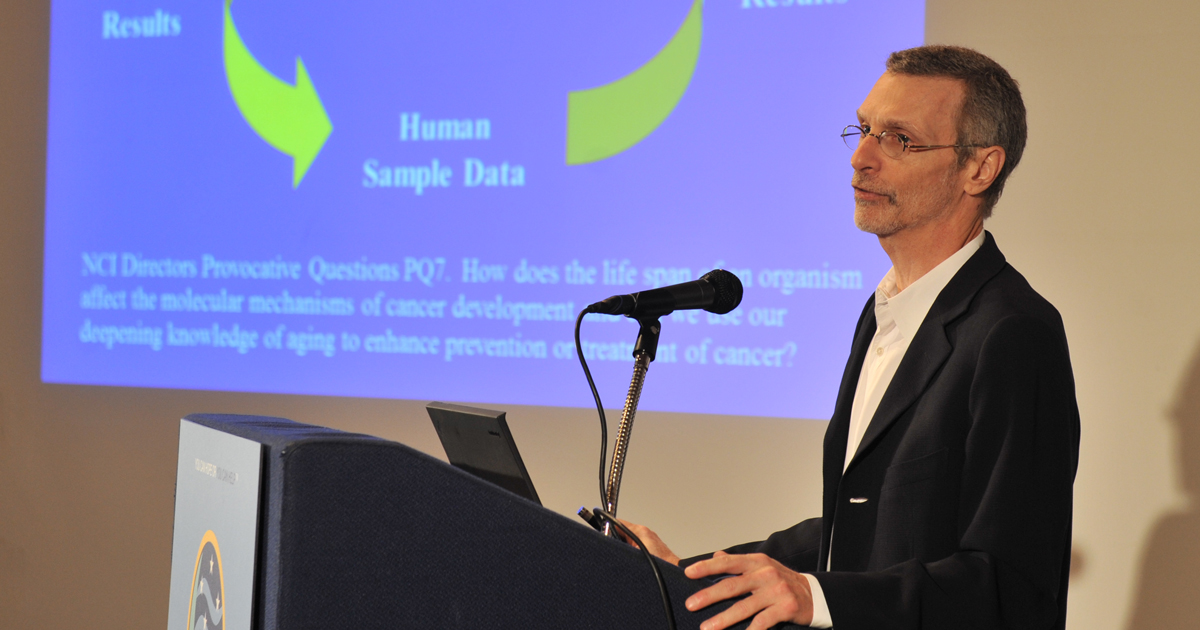
David Gius, MD, PhD from Northwestern University was funded in the 2012 cycle of the Hirshberg Foundation’s annual Seed Grant Program. The results of the study explain the genetic connection between aging and cancer.

Gius is the Vice Chair of Translation Research in the Department of Radiation Oncology and Pharmacology at Northwestern University Feinberg School of Medicine and has been studying the relationship between aging and cancer. A fundamental observation in oncology is that the rate of malignancies increases significantly as a function of age and the development of cancers. In fact, advanced age is the single most important predictive variable for cancer incidence in pancreatic cancers. Dr. David Gius and his colleagues have investigated and found that this relationship involves one of the primary anti-aging genes, SIRT2, which interacts with KRAS and alters KRAS activity establishing a cellular environment in the pancreas favoring proliferation and genomic instability. KRAS mutations are observed in 95% of patients with pancreatic adenocarcinoma. Thus there is a genetic connection between aging and the early events that put humans at risk for pancreatic cancer. They have published their work in Oncotarget, 2016, Vol. 7, (No. 49): pages: 80336-80349.

image_pdfimage_print

Filed Under: News, Research

Hirshberg Funded International Researcher Publishes Findings
13th Annual Symposium Video Presentations

Patient Support Resources

from the comfort of your home


Our Webinar Library »

Never Give Up.
The journey continues with an end in sight.
Our Stories »
SUBSCRIBE
Our Free E-Newsletter
Sign up to receive information on breaking news, patient programs and upcoming events.
You can custom tailor your subscriptions and unsubscribe at any time.
  • How You Can Help
  • Make A Donation
  • Host an Event
  • Shop Online Store
  • Signature Events
  • L.A. Cancer Challenge
  • Tour De Pier
  • Hirshberg Training Team
  • More
  • News
  • Press
  • Contact

Stay Connected

Join Our E-newsletter

  • Legal and Privacy
  • Financial Information
  • Contact