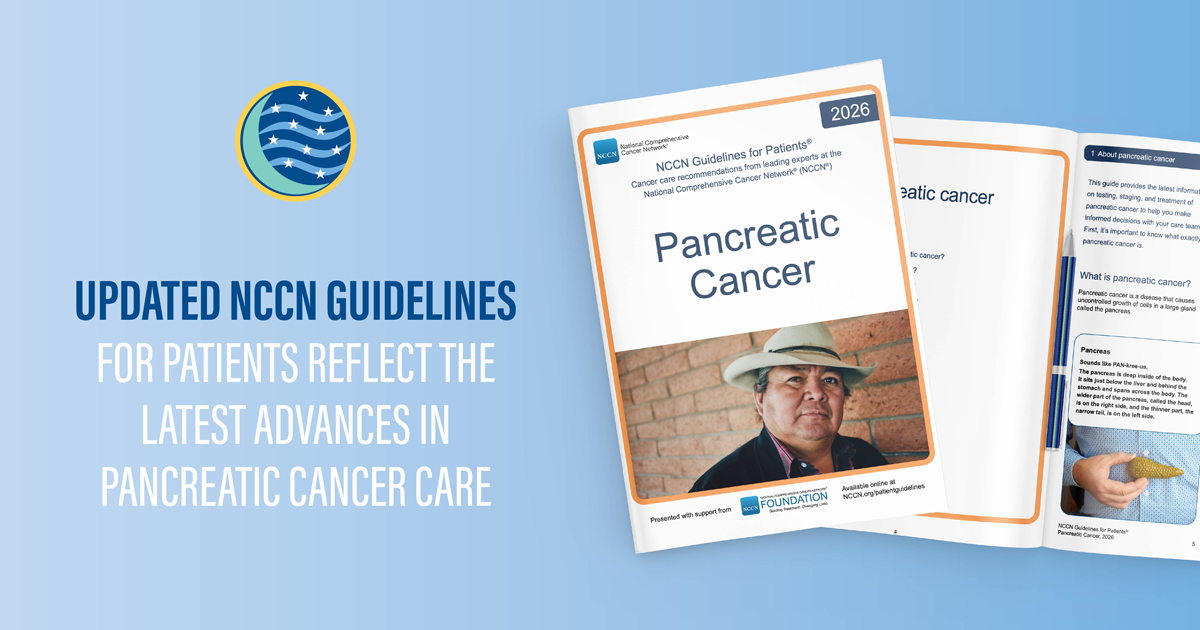
The latest edition of the NCCN Guidelines for Patients: Pancreatic Cancer is now available, providing patients and caregivers with updated information to help them better understand treatment options, ask informed questions, and participate in decisions about their care.
The Hirshberg Foundation is proud to continue its support of this important resource, ensuring that patients and families have free access to expert-developed information at every stage of the pancreatic cancer journey.
Created by leading pancreatic cancer specialists and translated into clear, patient-friendly language, the NCCN Guidelines for Patients help individuals understand complex medical information, navigate treatment decisions, and feel more confident in conversations with their healthcare team. The updated guide is available online at no cost and can also be accessed through the NCCN Guidelines for Patients and NCCN Clinical Guidelines mobile apps.
“The NCCN Guidelines for Patients are among the most valuable resources we can provide to someone facing a pancreatic cancer diagnosis,” says Amy Reiss, Director of Patient Programs at the Hirshberg Foundation. “They help patients and families understand their options, ask questions, and feel empowered throughout their care.”
What’s New in the 2026 Guidelines
The latest edition now provides updated recommendations regarding who should receive biomarker testing and molecular profiling. As precision medicine continues to evolve, these tests can help identify targeted treatment options based on a patient’s individual tumor characteristics.
Additional information has been added about staging laparoscopy, a procedure that may help determine whether cancer has spread to the lining of the abdomen before treatment decisions are made.
Several updates focus on tailoring treatment based on a patient’s overall health and ability to tolerate therapy. The guidelines now include revised performance status definitions, which are used to assess a patient’s overall well-being, functional capacity, and ability to perform daily activities. The performance status helps your care team make informed decisions on the suitability of various treatments, predict prognosis, and monitor disease progression. There are additional recommendations for patients with greater physical limitations as well.
The updated guidelines also clarify the role of maintenance therapy or the de-escalation of treatment for patients whose cancer has responded to initial treatment to keep the disease under control, minimize side effects, and help patients maintain their quality of life.
New treatment options have also been added, including:
- FOLFOX (folinic acid, fluorouracil and oxaliplatin) as a preferred second-line therapy option for certain patients when first-line therapy did not or has stopped working, or has side effects that aren’t tolerated.
- The PAXG (Cisplatin/Albumin-bound Paclitaxel/Capecitabine/Gemcitabine) regimen as a new neoadjuvant treatment approach before surgery.
- Additional guidance regarding treatment decisions following neoadjuvant therapy.
- Consideration of local treatment for metastatic disease in selected situations.
- Updated information regarding the use of subcutaneous pembrolizumab
Importantly, the updated guide also includes clearer decision points to help patients understand when a treatment regimen may be changed or repeated during second-line therapy.
In addition to clinical updates, revisions based on patient and clinician feedback have made the information even easier to understand and navigate. These improvements help ensure that patients and caregivers can find the answers they need when they need them most.
The NCCN Foundation expressed its appreciation for the partnership that makes this resource possible, “many thanks to the Hirshberg Foundation for supporting this important resource for patients and caregivers.”
At the Hirshberg Foundation, we believe that knowledge is one of the most powerful tools patients can have. By supporting the NCCN Guidelines for Patients, we help ensure that anyone facing pancreatic cancer has access to trusted information, compassionate guidance, and the resources needed to make informed decisions.
The updated NCCN Guidelines for Patients: Pancreatic Cancer are available now.

